Menopause and Gut Health: What Actually Helps You Feel Better
Your hormones shifted. So did your gut bacteria. Here's what science reveals about the connection—and what you can do about it.
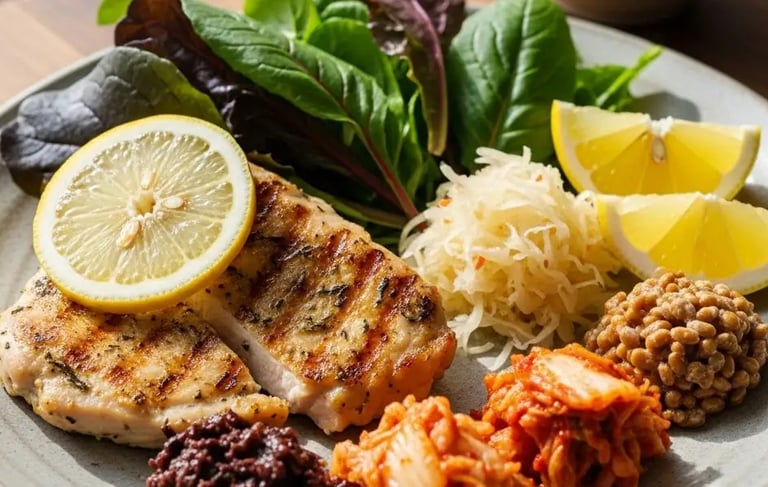
You’re eating better.
Trying to sleep.
Walking when your knees cooperate.
Maybe you’ve added yogurt.
Kimchi.
Or an expensive probiotic.
But you still wake up sweaty.
Your jeans feel tighter.
Your mood is unpredictable.
And some days, your brain seems to have left the building.
First, take a breath.
You are not doing menopause wrong.
Your hormones are changing.
Your gut may be changing, too.
But your gut is only one part of the story.
The good news?
You have more options than “just deal with it.”
What’s Happening Inside?
During perimenopause, your ovaries do not stop working overnight.
Hormone levels rise and fall.
That can make your periods:
Shorter or longer
Heavier or lighter
Closer together
Less predictable
You may also notice:
Hot flashes
Night sweats
Poor sleep
Mood changes
Brain fog
Vaginal dryness
Lower interest in sex
Knee or back pain
Menopause is reached after 12 months without a menstrual period.
In the United States, the average age is about 51.
These hormone changes can affect:
Body temperature
Sleep
Mood
Muscles and bones
Vaginal and urinary health
Where your body stores fat
But not every new symptom is caused by menopause.
Thyroid problems, anemia, sleep apnea, depression, and medication side effects can feel similar.
If something feels severe, keeps getting worse, or affects your daily life, talk with a healthcare professional.
Your Gut and Estrogen Talk to Each Other
Your gut does more than digest lunch.
It also helps process estrogen.
Here’s the simple version:
Your liver processes estrogen your body has already used.
Some of that estrogen moves into your intestines.
Certain gut bacteria produce an enzyme called beta-glucuronidase.
This enzyme can release some of the estrogen.
The estrogen may then be absorbed into your bloodstream again.
Scientists call the collection of gut bacteria involved in this process the estrobolome.
In other words, your gut may influence how your body processes and reuses estrogen.
And the relationship works both ways.
As estrogen falls during menopause, the mix and activity of bacteria in your gut may also change.
In turn, those changes may affect how estrogen and plant compounds such as soy isoflavones are processed.
That matters because estrogen is connected to:
Body-fat distribution
Blood cholesterol
Bone strength
Mood
Brain function
Vaginal and urinary health
So, taking care of your gut may support your body as it adjusts to those hormonal changes.
What Human Studies Found
In a 2024 randomized trial, 111 healthy women going through perimenopause or menopause took either a specific three-strain probiotic or a placebo for 12 weeks.
At the end of the trial:
Estrogen levels had fallen in the placebo group.
Estrogen levels remained more stable in the probiotic group.
The probiotic group had higher estradiol and estrone levels than the placebo group.
Take note that the study:
a) Measured estrogen levels—not whether women had fewer hot flashes, slept better, or lost weight.
b) Tested one specific probiotic formula, which means not every yogurt, fermented food, or probiotic supplement will have the same effect.
Another controlled trial studied 80 women ages 40–60 with mild menopause-related symptoms.
Women who took a specific probiotic called Lactobacillus gasseri CP2305 reported greater improvements in several symptom scores than women taking a placebo, including some improvements in hot flashes and psychological symptoms.
These studies give us a reason to pay attention to gut health.
Supporting your gut may help your body handle some menopause-related changes.
Start With Your Plate
You do not need to stop eating every food you enjoy.
And you definitely do not need a shelf full of supplements.
Give Your Gut What It Needs
You do not need an expensive “hormone-balancing” probiotic.
Start with food.
A gut-friendly eating pattern generally includes:
Fiber-rich vegetables
Chia seeds
Ground flaxseed
Avocado
Berries
Nuts
Soybeans and edamame
Tofu and tempeh
Fermented foods
Enough water
Fiber feeds certain gut bacteria.
Those bacteria can produce short-chain fatty acids—small compounds that help support the intestinal lining and communicate with the immune and metabolic systems.
If you do not currently eat much fiber, increase it slowly.
Try one change at a time:
Add 1 tablespoon of ground flaxseed to yogurt.
Add chia seeds to an unsweetened smoothie.
Put 1/2 cup of edamame on a salad.
Add an extra serving of broccoli or cauliflower at dinner.
Use shirataki noodles with tofu and vegetables.
Snack on a small portion of walnuts.
Too much fiber too quickly can cause gas, bloating, or stomach cramps.
Can Fermented Foods Help?
Fermented foods are made with bacteria, yeast, or other microorganisms.
Some contain live cultures when you eat them.
Others no longer contain live microbes but may still provide protein, fiber, vitamins, or compounds produced during fermentation.
Good options include:
Plain yogurt with live cultures
Kefir
Tempeh
Miso
Natto
Kimchi
Sauerkraut
Fermented soybean products
Fermented foods may support a more varied gut environment.
Some also provide beneficial bacteria or substances made during fermentation.
And there is now some direct research involving menopausal women.
What the Yogurt Studies Found
In one small randomized trial, 66 postmenopausal women ate 100 grams—about 1/2 cup—of yogurt every day for six weeks.
One group ate probiotic yogurt.
The other group ate ordinary yogurt.
Compared with the ordinary-yogurt group, women eating probiotic yogurt reported improvements in:
Anxiety
Stress
Overall menopause-related quality of life
The probiotic yogurt did not produce a significant improvement in sleep quality or depression.
A different six-week randomized trial studied 60 menopausal women.
One group ate 100 grams of prebiotic-rich yogurt daily.
The control group ate regular yogurt.
The prebiotic-yogurt group reported lower overall menopause-symptom scores, including improvements in anxiety, depression, and vasomotor symptoms such as hot flashes.
Take note that they do not prove that any yogurt in your grocery store will produce the same results.
The exact bacteria, added prebiotics, diet, and characteristics of the women may all affect the outcome.
Still, yogurt is a practical place to start.
Your Fermented-Food Plan
Choose one fermented food.
You do not need five at once.
Option 1: Yogurt
Look for:
“Live and active cultures” on the label
Little or no added sugar
A product you digest comfortably
Try:
About 1/2 cup of plain yogurt
Berries for sweetness
Chia seeds or ground flaxseed for extra fiber
Cinnamon for flavor
Greek yogurt is higher in protein.
Regular yogurt may contain slightly more lactose but is often less expensive.
If you avoid dairy, choose an unsweetened cultured soy yogurt with live cultures.
Check the label because some plant-based yogurts provide very little protein.
Option 2: Kefir
Kefir is a fermented milk drink.
Start with:
1/4 to 1/2 cup
An unsweetened or low-sugar variety
Go for water kefir, coconut water kefir or coconut milk kefir if you are sensitive to dairy
Drink it by itself or blend it with berries and chia seeds.
Option 3: Kimchi or Sauerkraut
Start with:
1–2 tablespoons with lunch or dinner
Refrigerated products labeled as containing live cultures
Lower-sodium options when available
Add them to:
Eggs
Salads
Chicken or salmon
Lettuce wraps
Cauliflower-rice bowls
Some products sold on regular shelves have been heat-treated for storage.
They can still be enjoyable vegetables, but they may not contain live cultures.
Start small:
Add 1–2 tablespoons of sauerkraut or kimchi to lunch.
Have 1/2 cup of plain yogurt or kefir with berries.
Add tempeh to one dinner this week.
Stir miso into warm soup after taking it off high heat.
Check the label if you need to limit sodium or added sugar.
And remember: not every fermented food contains live microbes when you eat it.
Cooking and heat treatment may kill them.
That does not make the food unhealthy.
It simply means it may not provide live cultures.
Option 4: Natto
Why Vitamin K2 Matters for Bones
Vitamin K2 helps activate osteocalcin, a protein that helps bind calcium to bone and supports bone mineralization.
A meta-analysis of 16 randomized trials involving 6,425 postmenopausal women found that vitamin K2 helped maintain or improve bone mineral density in the lower spine.
The benefits appeared strongest when K2 was combined with calcium, vitamin D, or osteoporosis medication.
So the balanced takeaway is encouraging: vitamin K2 may support stronger bones after menopause, especially as part of a complete bone-health plan.
It should complement—not replace—adequate calcium, vitamin D, strength exercise, bone-density screening, or prescribed osteoporosis treatment.
And that brings us to natto—a traditional Japanese fermented soybean food and one of the richest natural sources of vitamin K2.
Natto is a traditional Japanese food made from fermented soybeans.
It contains:
Protein
Fiber
Vitamin K2
Compounds created during fermentation
Natto contains vitamin K2 (MK-7)—about 350 micrograms per small serving (40g).
K2 activates a protein called osteocalcin.
Osteocalcin tells your bones how to use calcium.
No K2 = calcium can't stick to bone.
A 15-year study followed 1,417 Japanese women after menopause.
Women who ate at least seven 40-gram packages of natto each week had a 44% lower rate of osteoporotic fractures than women who ate less than one package weekly.
Take note that this was an observational study.
It found a connection, but it could not prove that natto prevented the fractures.
Differences in diet, health, or lifestyle may also have played a role.
The practical takeaway:
Try natto if you enjoy it.
Do not force yourself to eat it every day.
Do not treat seven packages a week as a proven medical dose.
Do not rely on natto alone to protect your bones.
If you take warfarin or another medication affected by vitamin K, talk with your doctor or pharmacist before eating it regularly.
For stronger bones, focus first on:
Strength training
Weight-bearing movement
Enough calcium
Enough vitamin D
Fall prevention
Bone-density screening when appropriate
Option 5: Fermented Soybeans
Fermented soy foods give you two things in one place:
Soy compounds called isoflavones
Compounds produced through fermentation
Your gut bacteria help transform some soy isoflavones into forms your body can use.
However, this ability varies from woman to woman because everyone carries a different mix of gut bacteria.
Practical choices include:
Tempeh
Miso
Natto
Fermented soybean paste
Miso is usually the easiest starting point for U.S. shoppers.
Stir a spoonful into warm water (hot water kills the good bacteria), soup, or dressing.
Miso can be high in sodium, so keep the portion modest if you have been advised to limit salt.
Fermented Soy Research
Could Soybeans Reduce Hot Flashes?
Soybeans provide:
Plant protein
Fiber
Healthy fats
Natural plant compounds called isoflavones
Isoflavones are sometimes called phytoestrogens because their structure is somewhat similar to estrogen.
But they are not the same as the estrogen your body produces.
Soybeans are worth discussing because some studies produced encouraging results.
In the 2021 WAVS (Women's Study for the Alleviation of Vasomotor Symptoms) trial, researchers randomly assigned 38 postmenopausal women to one of two groups for 12 weeks:
One group changed their entire diet—they followed a low-fat vegan diet and ate 1/2 cup (86g) of cooked whole soybeans every day.
The other group continued its usual diet.
Among the women following the plant-based diet with soybeans:
Total hot flashes fell by 79% (compared with 49% in the control group).
Moderate-to-severe hot flashes fell by 84%(compared with 42% in the control group).
Ten of the 17 women who completed the intervention reported no moderate or severe hot flashes by the end of the study.
Take note that it's a combination of a low-fat vegan diet plus the addition of soybeans, not soybeans alone, that reduces hot flashes.
A later 12-week trial involving 84 women tested the same combination.
Moderate-to-severe hot flashes fell by 88% in the diet-and-soybean group, compared with 34% in the control group.
Small studies of traditional Korean fermented soybean foods have reported improvements in menopause-symptom scores and changes in gut bacteria.
One 2025 trial involved 60 postmenopausal women who consumed tablets made from cheonggukjang, a fermented soybean food, for eight weeks.
Symptoms improved across the study groups, and the group receiving the product with more beneficial microorganisms showed the greatest improvement.
A separate study of 62 postmenopausal women reported lower menopause-symptom scores after consuming different forms of doenjang, another fermented soybean food.
Take note that both trials:
a) compared different fermented-soy preparations rather than comparing fermented soy with a true placebo or no-treatment group, meaning difficult to know how much of the improvement came from the fermented food itself.
b) The products were also provided as measured tablets. They were not the same as adding a spoonful of grocery-store miso to dinner.
So enjoy fermented soy as nutritious food.
Just do not treat it like medication.
The National Center for Complementary and Integrative Health says soy protein or soy isoflavones may produce a small reduction in the frequency and severity of hot flashes.
However, study results have not been completely consistent.
A Practical Soybean Experiment
If you like soy and do not have a soy allergy, you could try whole soy foods for 8–12 weeks.
Easy Soy Foods
Whole soy foods are widely available in the United States:
Edamame: Young green soybeans, usually sold frozen
Tofu: Mild and easy to use in stir-fries, soups, salads, and tacos
Tempeh: A firm, fermented soybean food with a nutty flavor
Soy milk: Choose unsweetened milk fortified with calcium and vitamin D
Roasted soybeans: A crunchy snack
Natto: Fermented whole soybeans with a strong flavor and sticky texture
Try one of these easy ideas:
Start with 1/2 cup of cooked soybeans.
Add 1/2 cup of shelled edamame to a salad.
Blend thawed edamame with garlic and lemon juice to make a plant-based hummus.
Replace some ground meat in tacos with crumbled tofu.
Add tofu to vegetable soup.
Bake tempeh strips for a sandwich or salad bowl.
Use fortified soy milk in a smoothie or blended tomato to make it rich and creamy without dairy.
The original trial used 1/2 cup (86g) of cooked whole soybeans every day.
Edamame, tofu, and soy milk are convenient alternatives, but they were not the exact foods tested in that trial.
Track your hot flashes while you try it:
How many occur each day?
How many wake you at night?
Are they mild, moderate, or severe?
Do they interfere with work, sleep, or exercise?
After 8–12 weeks, look at the pattern.
If soy helps, you can continue eating it as part of your regular diet.
If nothing changes, you have not failed.
Soy simply may not be enough for your symptoms.
Food Before Supplements
Whole soy foods provide protein, fiber, and other nutrients.
Soy or isoflavone supplements are more concentrated.
They are not the same as eating tofu, edamame, or cooked soybeans.
Soy can also cause:
Gas
Bloating
Constipation
Diarrhea
Nausea
Certain high-tyramine soy products may interact with monoamine oxidase inhibitor medications.
If you take prescription medicine, have a soy allergy, use hormone therapy, or have a history of hormone-sensitive cancer, discuss concentrated soy supplements with your healthcare team before using them.
Soybeans are not a replacement for proven menopause care.
But as a nutritious whole food, they may be worth trying—especially if you already enjoy them.
Start Slowly
More is not always better.
Suddenly adding large amounts of fermented food may cause:
Gas
Bloating
Loose stools
Stomach discomfort
Try this:
Week 1: Eat 1/2 cup of yogurt labelled with "live cultures"" three times.
Week 2: Continue the yogurt and try tempeh once.
Week 3: Add 1–2 tablespoons of kimchi or sauerkraut a few times.
Week 4: Keep the foods you enjoyed and tolerated.
You do not need fermented food at every meal.
Three to five servings spread across the week is a realistic starting routine—not a clinically proven menopause dose.
A Few Safety Notes
Check with your healthcare professional before making fermented foods a daily habit if you:
Take warfarin or another medicine affected by vitamin K
Have a weakened immune system
Have been told to limit sodium
Have severe digestive disease
Are allergic to soy or dairy
Develop hives, swelling, wheezing, or another allergic reaction
Natto is especially high in vitamin K and may interfere with warfarin.
Kimchi, sauerkraut, miso, and fermented soybean pastes can contain a lot of sodium.
Some fermented foods can also trigger headaches, flushing, or digestive symptoms in people who are sensitive to histamine.
Keep Your Expectations Realistic
Supporting your gut may help with:
Digestion
Bowel regularity
Diet quality
Some mood or stress symptoms
Certain metabolic or bone-health measures
Possibly some menopause symptoms
But fermented foods are not a substitute for proven treatment when hot flashes, night sweats, vaginal discomfort, or mood changes are disrupting your life.
Think of gut care as one layer of your menopause plan.
Not the whole plan.
Your next step can be simple:
Buy one unsweetened yogurt with live cultures.
Add berries and ground flaxseed.
Eat it several times this week.
Pay attention to your digestion and how you feel.
No expensive powder.
Just one useful habit your gut may appreciate.
Eat More Fiber—Slowly
Fiber feeds many of the helpful bacteria in your gut.
Good choices include:
Broccoli
Cauliflower
Cabbage
Brussels sprouts
Okra
Leafy greens
Green beans
Edamame
Asparagus
Blackberries
Zucchini
Jicama
Mushrooms
Chia seeds
Ground flaxseed
Shirataki/konjac noodles
Avocado
Nuts
For example:
Add chia seeds to plain Greek yogurt.
Stir ground flaxseed into a smoothie.
Use cauliflower rice under salmon or chicken.
Replace regular pasta with zucchini noodles.
Add avocado to eggs or a salad.
Snack on a small handful of almonds.
Serve berries with unsweetened yogurt.
Use shirataki noodles in soup or stir-fry.
Chia seeds, flaxseed, avocado, and many non-starchy vegetables provide fiber without a large amount of digestible carbohydrate.
A Note About Shirataki Noodles
Shirataki noodles are made from konjac root.
They are very low in calories and digestible carbohydrates.
Most of their carbohydrate comes from a water-absorbing fiber called glucomannan.
They can be useful when you want a lower-carb substitute for pasta.
But they are not a complete meal.
Pair them with:
Tofu, tempeh, chicken, shrimp, eggs, or fish
Broccoli, cabbage, mushrooms, or bok choy
A flavorful sauce such as soy sauce
If you are new to shirataki noodles:
Begin with half a package.
Rinse them thoroughly.
Heat them according to the package instructions.
Cut long noodles into shorter pieces.
Chew them well.
Drink water with your meal.
Konjac fiber can cause gas, bloating, cramps, diarrhea, or constipation in some people.
Anyone with swallowing problems should be especially cautious, and dry glucomannan tablets or powders carry greater blockage risks than hydrated noodles.
You do not need to eliminate carbohydrates completely.
The goal is simply to choose fiber-rich foods that work for your blood sugar, appetite, digestion, and preferred way of eating.
So, a useful daily target is about 25 grams for women ages 31–50 and 22 grams for women ages 51 and older.
But don’t jump from very little fiber to a huge bowl of veggies overnight.
Your stomach may rebel.
Instead:
Add one fiber-rich food every few days.
Drink enough water.
Pay attention to how your body responds.
Reduce the portion if gas or bloating becomes uncomfortable.
For example, add berries to breakfast this week.
Next week, add 1 more fist-sized portion of dark leafy greens to your meal.
Small changes are easier on your gut—and easier to maintain.
Your Seven-Day Plan
No overhaul.
Just seven small steps.
Track one symptom. Choose hot flashes, sleep, mood, digestion, vaginal discomfort, or pain.
Add one fiber-rich food each day. Try berries, beans, leafy greens, nuts, or seeds, seaweed.
Eat a whole soy food three times this week. Edamame, tofu, tempeh, or soy milk all count.
Try one fermented food. Start with a small serving.
Complete two short strength sessions. Ten minutes is enough to begin.
Keep a steady wake-up time. Even after a rough night.
Make an appointment if symptoms are affecting your life. Bring your symptom notes.
The Truth You Need
Your gut matters.
But it is not the boss of your ovaries.
Eat more plants.
Include soybeans if they work for you.
Try fermented foods if you enjoy them.
Lift something safely.
Protect your sleep.
And if you still feel awful?
Ask for help.
The best menopause plan is not the one with the boldest promise.
It is the one that fits your symptoms, your medical history, and your real life.
Scientific References:
Eisenberg E. My Periods Have Changed. Is Menopause Around the Corner? American College of Obstetricians and Gynecologists. Published October 2020, reviewed February 2026. https://www.acog.org/womens-health/experts-and-stories/the-latest/my-periods-have-changed-is-menopause-around-the-corner
Hu S, Ding Q, Zhang W, Kang M, Ma J, Zhao L. Gut microbial beta-glucuronidase: a vital regulator in female estrogen metabolism. Gut Microbes. 2023;15(1):2236749. doi:10.1080/19490976.2023.2236749. https://www.tandfonline.com/doi/full/10.1080/19490976.2023.2236749
Wang H, Shi F, Zheng L, Zhou W, Mi B, Wu S, Feng X. Gut microbiota has the potential to improve health of menopausal women by regulating estrogen. Frontiers in Endocrinology. 2025;16:1562332. doi:10.3389/fendo.2025.1562332. https://www.frontiersin.org/journals/endocrinology/articles/10.3389/fendo.2025.1562332/full
Peters BA, Lin J, Qi Q, et al. Menopause Is Associated with an Altered Gut Microbiome and Estrobolome, with Implications for Adverse Cardiometabolic Risk in the Hispanic Community Health Study/Study of Latinos. mSystems. 2022;7(3):e0027322. doi:10.1128/msystems.00273-22. https://pmc.ncbi.nlm.nih.gov/articles/PMC9239235/
U.S. Department of Health and Human Services, Office on Women's Health. Healthy eating and women. https://womenshealth.gov/healthy-eating/healthy-eating-and-women
National Center for Complementary and Integrative Health. Soy. https://www.nccih.nih.gov/health/soy
Wastyk HC, Fragiadakis GK, Perelman D, et al. Gut-microbiota-targeted diets modulate human immune status. Cell. 2021;184(16):4137–4153.e14. doi:10.1016/j.cell.2021.06.019. https://pubmed.ncbi.nlm.nih.gov/34256014/
Kojima A, Ikehara S, Kamiya K, Kajita E, Sato Y, Kouda K, Tamaki J, Kagamimori S, Iki M. Natto Intake is Inversely Associated with Osteoporotic Fracture Risk in Postmenopausal Japanese Women. The Journal of Nutrition. 2020;150(3):599–605. doi:10.1093/jn/nxz292. https://pubmed.ncbi.nlm.nih.gov/31825069/
Andrews RAF, Lacey A, Roach H, et al. Diet, the Gut Microbiome, and Estrogen Physiology: A Review in Menopausal Health and Interventions. Nutrients. 2026;18(7):1052. doi:10.3390/nu18071052. https://www.mdpi.com/2072-6643/18/7/1052
Honda S, Tominaga Y, Espadaler-Mazo J, et al. Supplementation with a Probiotic Formula Having β-Glucuronidase Activity Modulates Serum Estrogen Levels in Healthy Peri- and Postmenopausal Women. Journal of Medicinal Food. 2024;27(8):720–727. doi:10.1089/jmf.2023.k.0320. https://pubmed.ncbi.nlm.nih.gov/38742994/
Sawada D, Sugawara T, Hirota T, Nakamura Y. Effects of Lactobacillus gasseri CP2305 on Mild Menopausal Symptoms in Middle-Aged Women. Nutrients. 2022;14(9):1695. doi:10.3390/nu14091695. https://pubmed.ncbi.nlm.nih.gov/35565662/
Shafie M, Homayouni Rad A, Mohammad-Alizadeh-Charandabi S, Mirghafourvand M. The effect of probiotics on mood and sleep quality in postmenopausal women: A triple-blind randomized controlled trial. Clin Nutr ESPEN. 2022;50:15-23. doi:10.1016/j.clnesp.2022.06.005. https://pubmed.ncbi.nlm.nih.gov/35871917/
Ma M, Ma Z, He Y, et al. Efficacy of vitamin K2 in the prevention and treatment of postmenopausal osteoporosis: A systematic review and meta-analysis of randomized controlled trials. Frontiers in Public Health. 2022;10:979649. doi:10.3389/fpubh.2022.979649. https://pmc.ncbi.nlm.nih.gov/articles/PMC9403798/
Barnard ND, Kahleova H, Holtz DN, Znayenko-Miller T, Sutton M, Holubkov R, Zhao X, Galandi S, Setchell KDR. A dietary intervention for vasomotor symptoms of menopause: a randomized, controlled trial. Menopause. 2023;30(1):80–87. doi:10.1097/GME.0000000000002080. https://pmc.ncbi.nlm.nih.gov/articles/PMC9812421/
Lim MJS, Parlindungan E, See E, Gan CH, Yap R, Yong GJM. Diet, the Gut Microbiome, and Estrogen Physiology: A Review in Menopausal Health and Interventions. Nutrients. 2026;18(7):1052. doi:10.3390/nu18071052. https://www.mdpi.com/2072-6643/18/7/1052
Shafie M, Homayouni Rad A, Mirghafourvand M. Effects of prebiotic-rich yogurt on menopausal symptoms and metabolic indices in menopausal women: a triple-blind randomised controlled trial. International Journal of Food Sciences and Nutrition. 2022;73(5):693–704. doi:10.1080/09637486.2022.2048360. https://pubmed.ncbi.nlm.nih.gov/35264075/
Han A-L, Ryu M-S, Yang H-J, Jeong D-Y, Choi K-H. The Efficacy of Cheonggukjang in Alleviating Menopausal Syndrome and Its Effects on the Gut Microbiome: A Randomized, Double-Blind Trial. Nutrients. 2025;17(3):505. doi:10.3390/nu17030505. https://www.mdpi.com/2072-6643/17/3/505
Han AL, Ryu MS, Yang HJ, Jeong DY, Choi KH. Evaluation of Menopausal Syndrome Relief and Anti-Obesity Efficacy of the Korean Fermented Food Doenjang: A Randomized, Double-Blind Clinical Trial. Nutrients. 2024;16(8):1194. doi:10.3390/nu16081194. https://www.mdpi.com/2072-6643/16/8/1194
Ge B, Zhang Z, Zuo Z. Updates on the Clinical Evidenced Herb-Warfarin Interactions. Evidence-Based Complementary and Alternative Medicine. 2014;2014:957362. doi:10.1155/2014/957362. https://pmc.ncbi.nlm.nih.gov/articles/PMC3976951/
Address
47 Macalister Lane, 10400 Georgetown, Pulau Pinang, Malaysia.
FDA Disclaimer
Results are not typical for everyone. Hoping you come across the solution that's just right for you.
Nothing on our website has been evaluated by the FDA or other medical bodies.
We're here to share educational wellness insights, not to replace medical advice and treatment, nor to diagnose, treat, cure, or prevent any health condition.
Think of our content as inspiration and information to discuss with your healthcare provider—not as a replacement for professional medical advice.
If you have health concerns, are pregnant or nursing, take medications, or manage a medical condition, please consult your doctor before making any changes based on what you read here.
Your health is unique to you, and your healthcare team knows you best.
We're just here to support your journey with research-backed information and encouragement.
Stay well! 💚
NouriEase is a brand of NOURISHED & ALIVE ENTERPRISE. All rights reserved.